TRL 7 Validated · UK Volleyball Intelligence

The UK's First Smartphone-First
Volleyball AI Platform

Scout transforms "noisy" amateur match video into uncertainty-aware tactical intelligence, prescriptive decision support, and automated training recommendations empowering every grassroots team with elite-level analysis from a single phone.

// TRL 7 Performance Metrics
Analysis Labour Reduction 80%+
Court Mapping Accuracy 15–20mm
Inference Latency <200ms
Platform Uptime SLA 99.9%
UK Affiliated Clubs 403+
Global Volleyball Participants 900M

Democratising Elite
Volleyball Intelligence

Scout introduces an innovative, smartphone-first volleyball scouting and coaching platform that transforms "noisy," amateur match video into uncertainty-aware tactical intelligence. By combining advanced computer vision, probabilistic scouting, and a formal tactical grammar, the system enables grassroots-to-semi-pro teams to access elite-level performance analysis without expensive analyst labour or specialised multi-camera rigs.

Unlike traditional dashboards that merely display descriptive statistics, Scout functions as a "tactical weapon" processing raw video to detect compound patterns such as "setter front-row dump threats" or "pipe attacks after perfect passes" via a single smartphone camera.

We are democratising the math of winning for the 99% of teams left behind by elite sports tech aligned with the Volleyball England "Game Plan" 2021–2031 and fully compliant with the Data (Use and Access) Act 2025.

Uncertainty-Native AI
Formal Tactical Grammar
Single-Phone AR Calibration
GDPR & DUA Act 2025
91% Gross Margin SaaS
Offline-First Architecture
Founder & CEO

Santhosh Gowthaman is the founder and lead architect of Scout Platform. He holds a B.E. in Aeronautical Engineering and an MSc in International Business from the University of Leicester, combining complex technical design with direct sporting leadership.

As a Volleyball Referee for GO Mammoth and Assistant Coach at London Giants, he understands the operational pain points of the grassroots volleyball community firsthand making Scout a truly founder-market fit innovation.

His engineering background in 3D spatial transformations and homography matrix estimation directly powers Scout's proprietary single-phone court calibration engine.

Contact the Founder →

From Raw Video to Tactical Weapon

Every match recording passes through Scout's four-stage AI pipeline in real time converting amateur smartphone footage into prescriptive coaching intelligence, automated drill plans, and GDPR-compliant performance records.

Capture
STEP 01

Single-Phone Capture

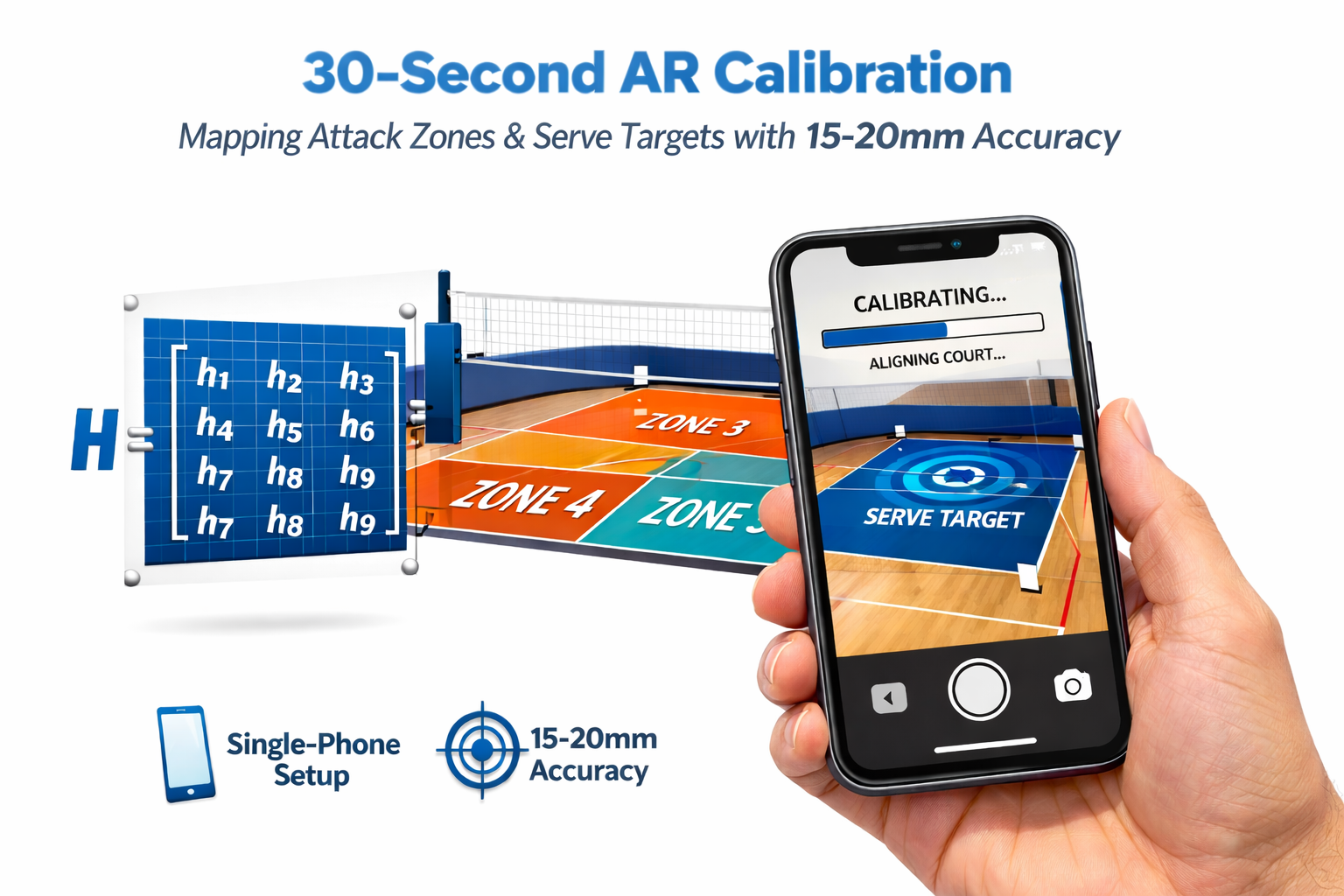
A 30-second AR onboarding flow calibrates your smartphone camera, estimating the court homography matrix ($H$) to map attack zones and serve targets with 15–20mm accuracy — no multi-camera rigs needed.

AI Recognition
STEP 02

AI Tactical Recognition

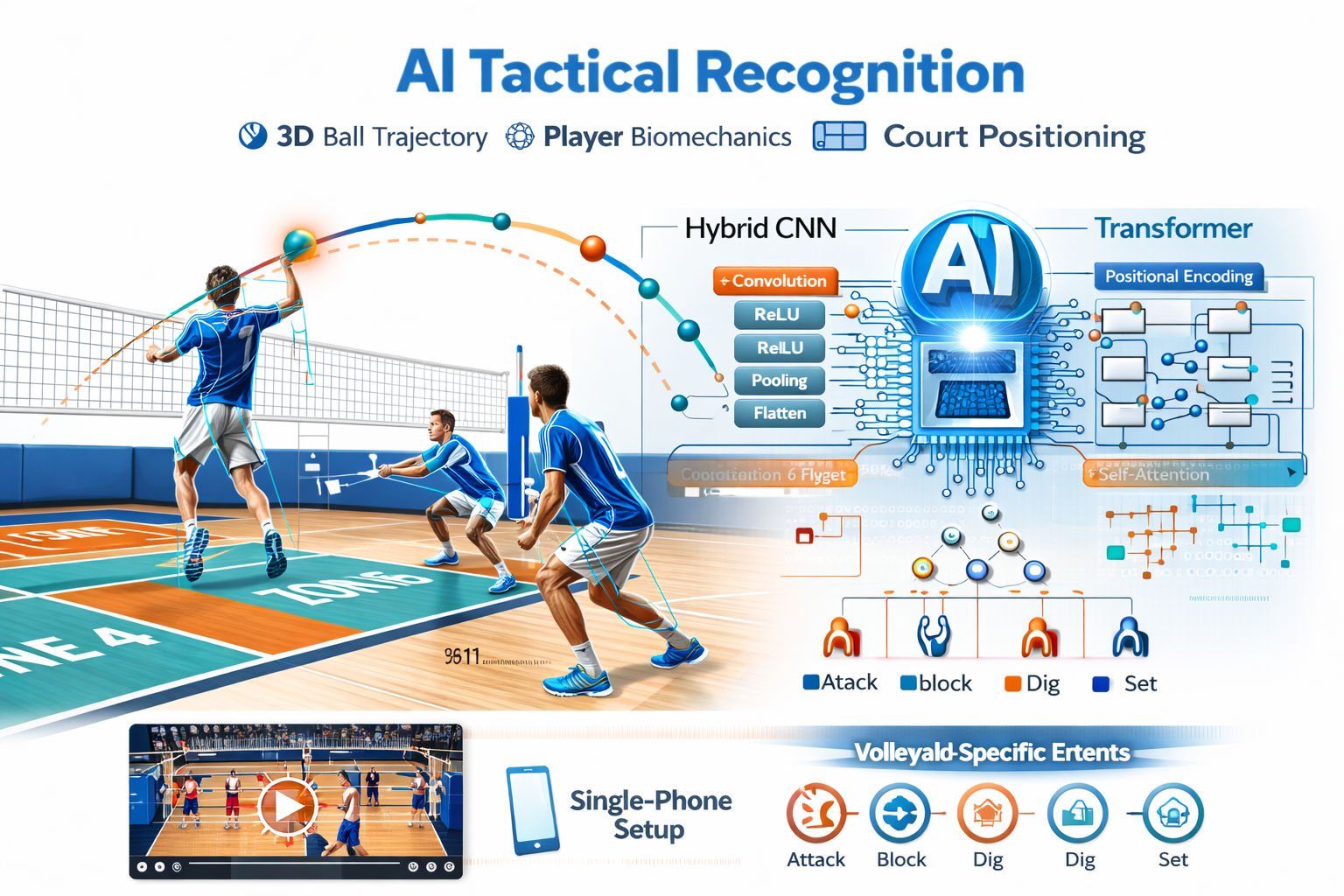
Hybrid CNN and Transformer architectures analyse 3D ball trajectories, player biomechanics, and court positioning in real time translating pixel-level movements into volleyball-specific events and compound tactical patterns.

Uncertainty Briefs
STEP 03

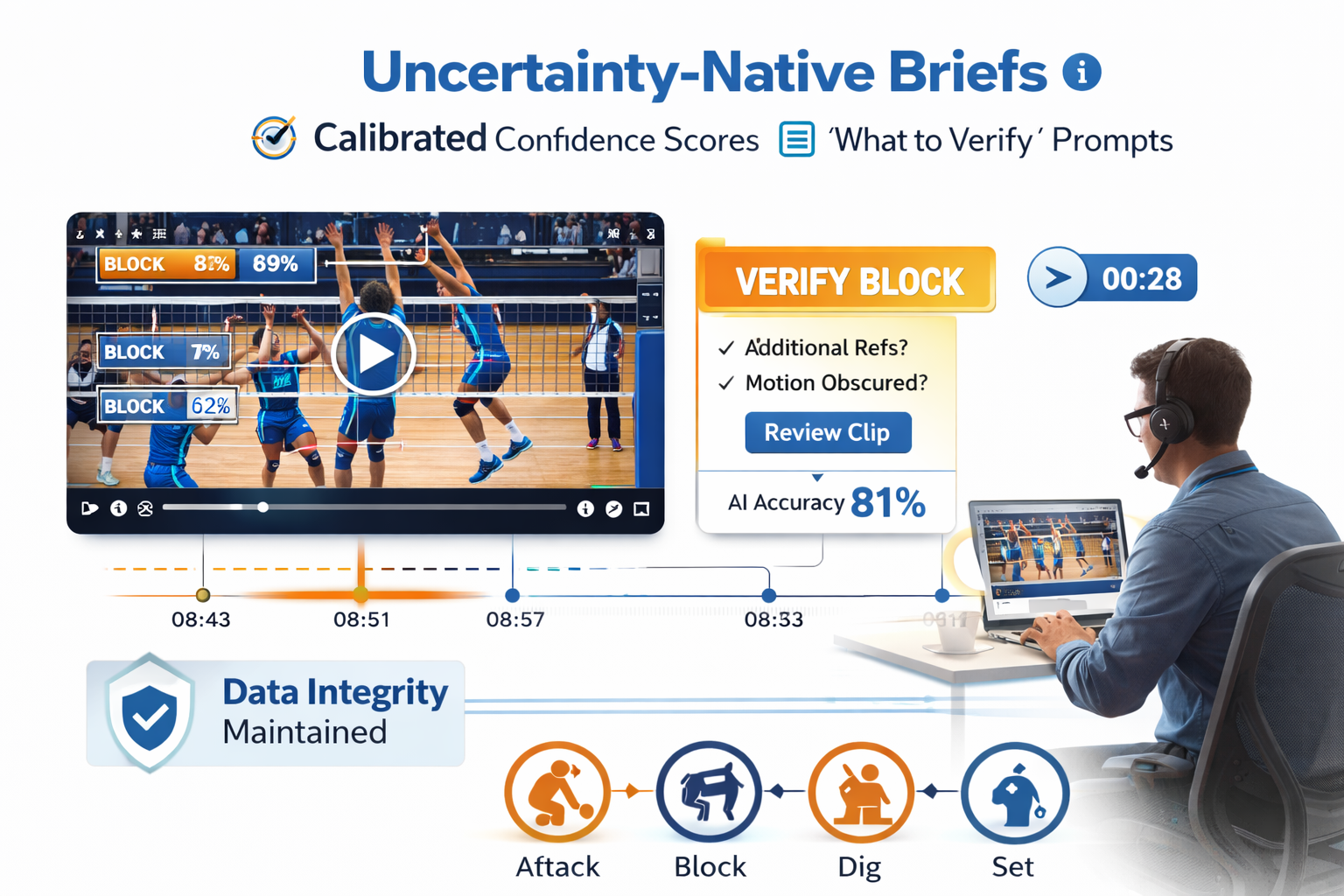
Uncertainty-Native Briefs

Instead of definitive but potentially flawed stats, Scout emits calibrated confidence scores and "what to verify" prompts ensuring 100% data integrity through targeted 30-second human-in-the-loop checks on ambiguous sequences.

Drill Prescriptions
STEP 04

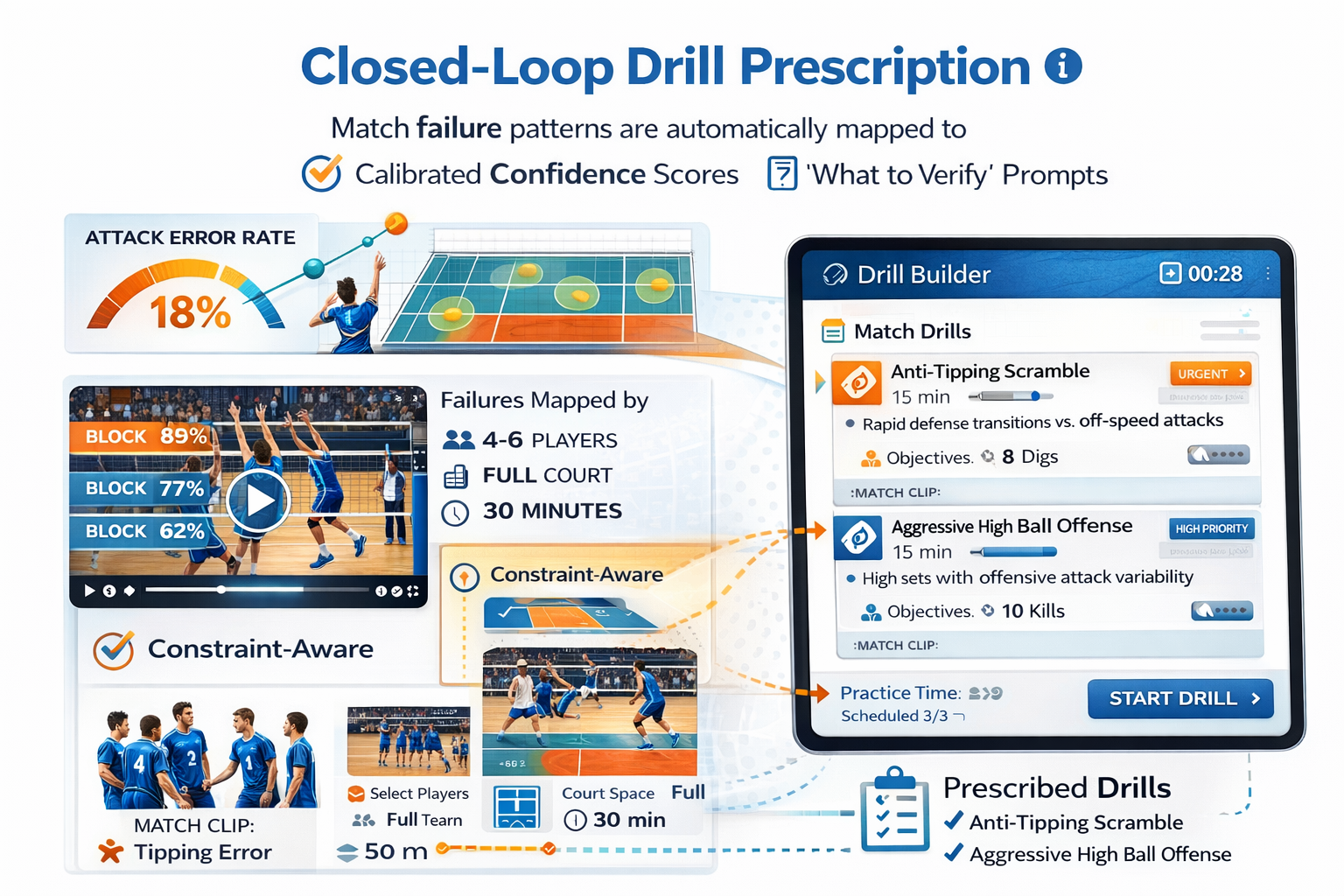
Closed-Loop Drill Prescription

Match failure patterns are automatically mapped to constraint-aware drill prescriptions parameterised by players available, court space, and time. Every drill is traceable back to specific triggering match clips.

Eight Proprietary Architectural Elements

The Scout framework is secured by eight distinct AI innovations each a defensible layer in the world's first smartphone-first volleyball intelligence system designed for the "noisy" reality of community gyms.

Uncertainty-Native Scouting
Element A

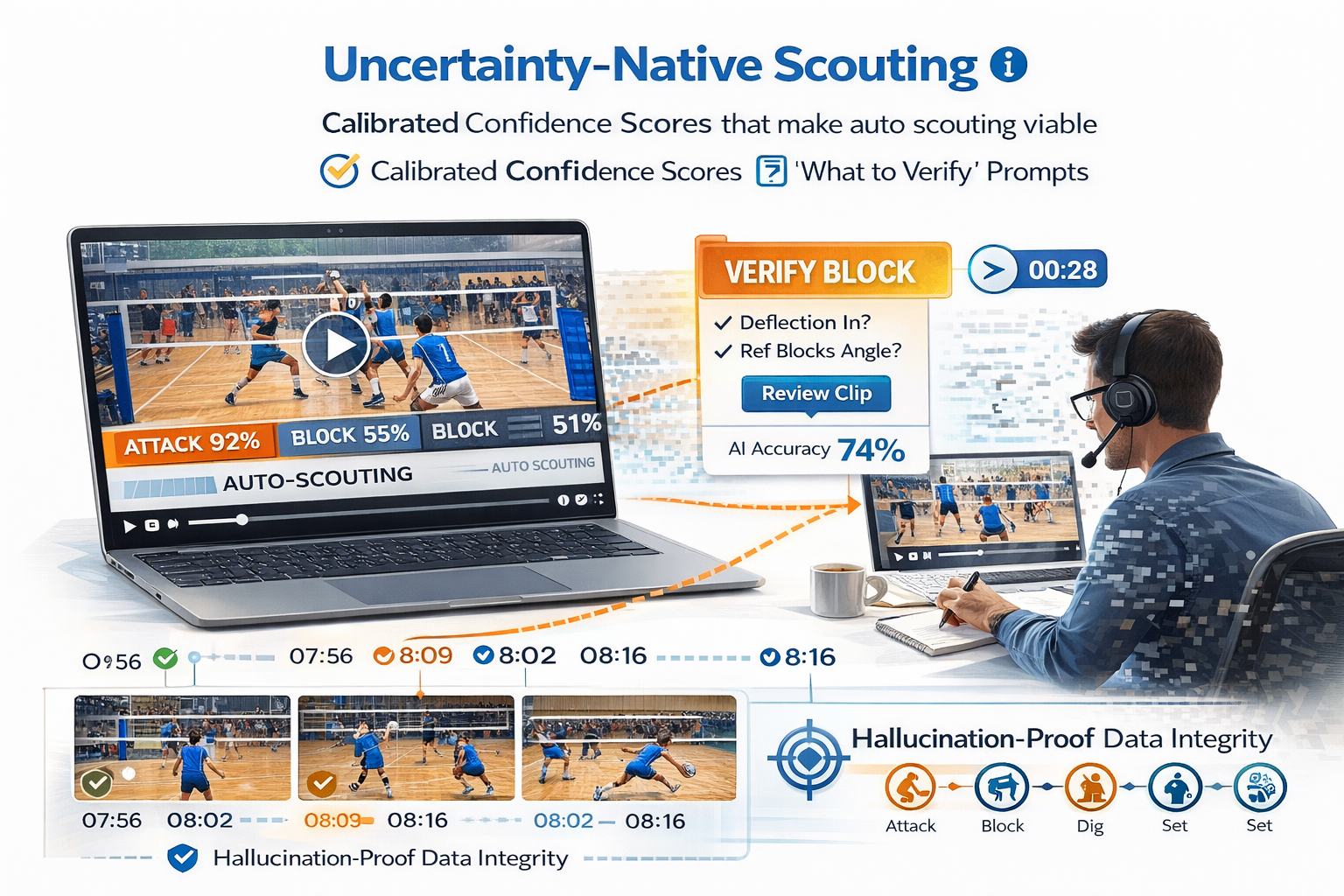
Uncertainty-Native Scouting

Calibrated confidence scores that make auto-scouting viable in messy amateur footage.

Instead of definitive plans, the system emits calibrated confidence scores and "what to verify" prompts, telling coaches exactly where a 30-second human check prevents tactical mistakes. This prevents AI "hallucinations" that erode coach trust in data-driven tools.

Formal Tactical Grammar
Element B

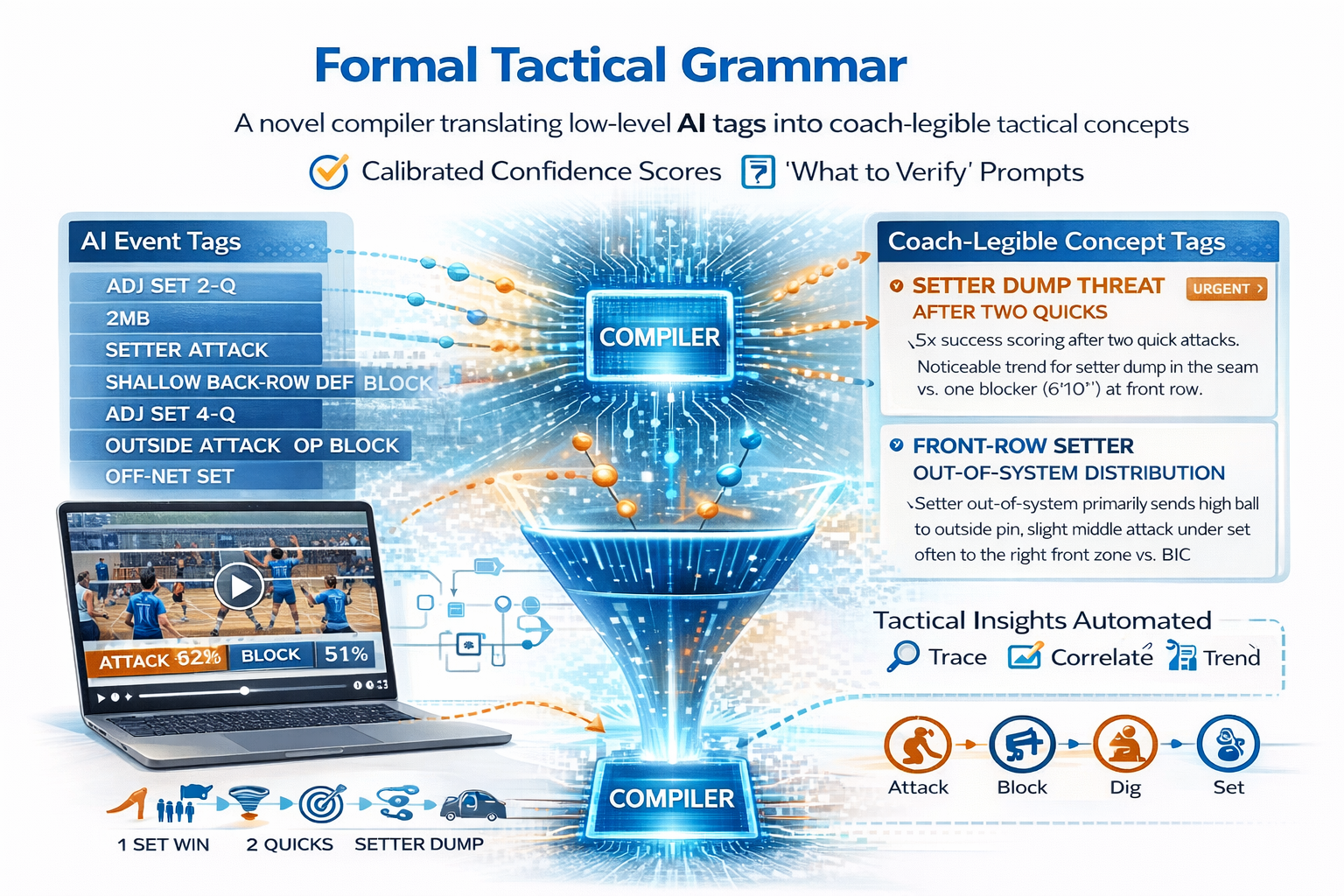
Formal Tactical Grammar

A novel compiler translating low-level AI tags into coach-legible tactical concepts.

A formal taxonomy aggregates low-level event tags into high-level concepts such as "setter dump threat after two quicks" or "out-of-system distribution patterns." This "Compiler" philosophy eliminates manual alphanumeric coding, reducing post-match review time by over 80%.

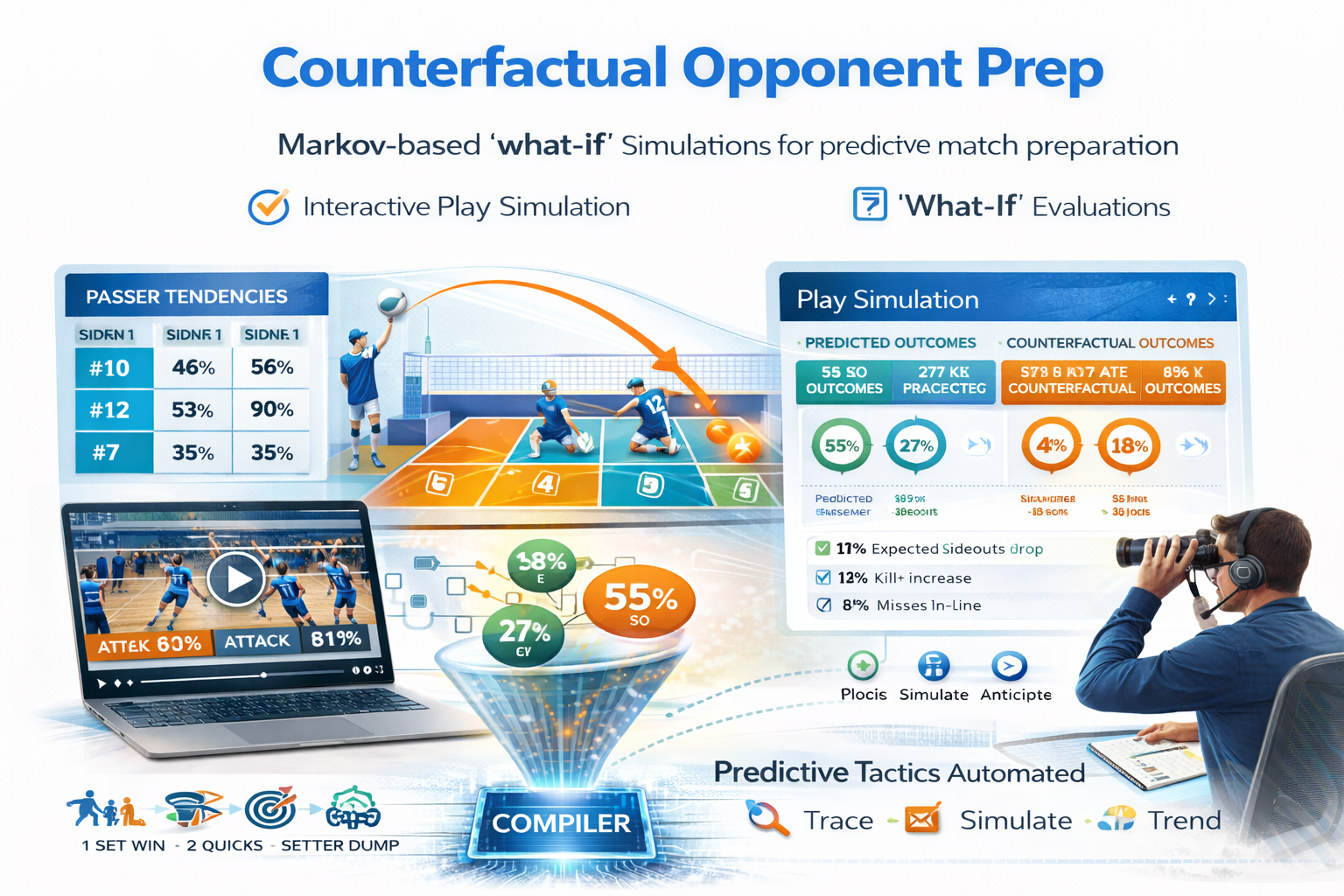
Counterfactual Opponent Prep
Element C

Counterfactual Opponent Prep

Markov-based "what-if" simulations for predictive match preparation.

Moves beyond tendency charts to decision support running "what-if" evaluations such as "If we serve Zone 1 at passer #12, expected side-out drops by X%." Markov-based transition models turn coaches from historians into tactical architects.

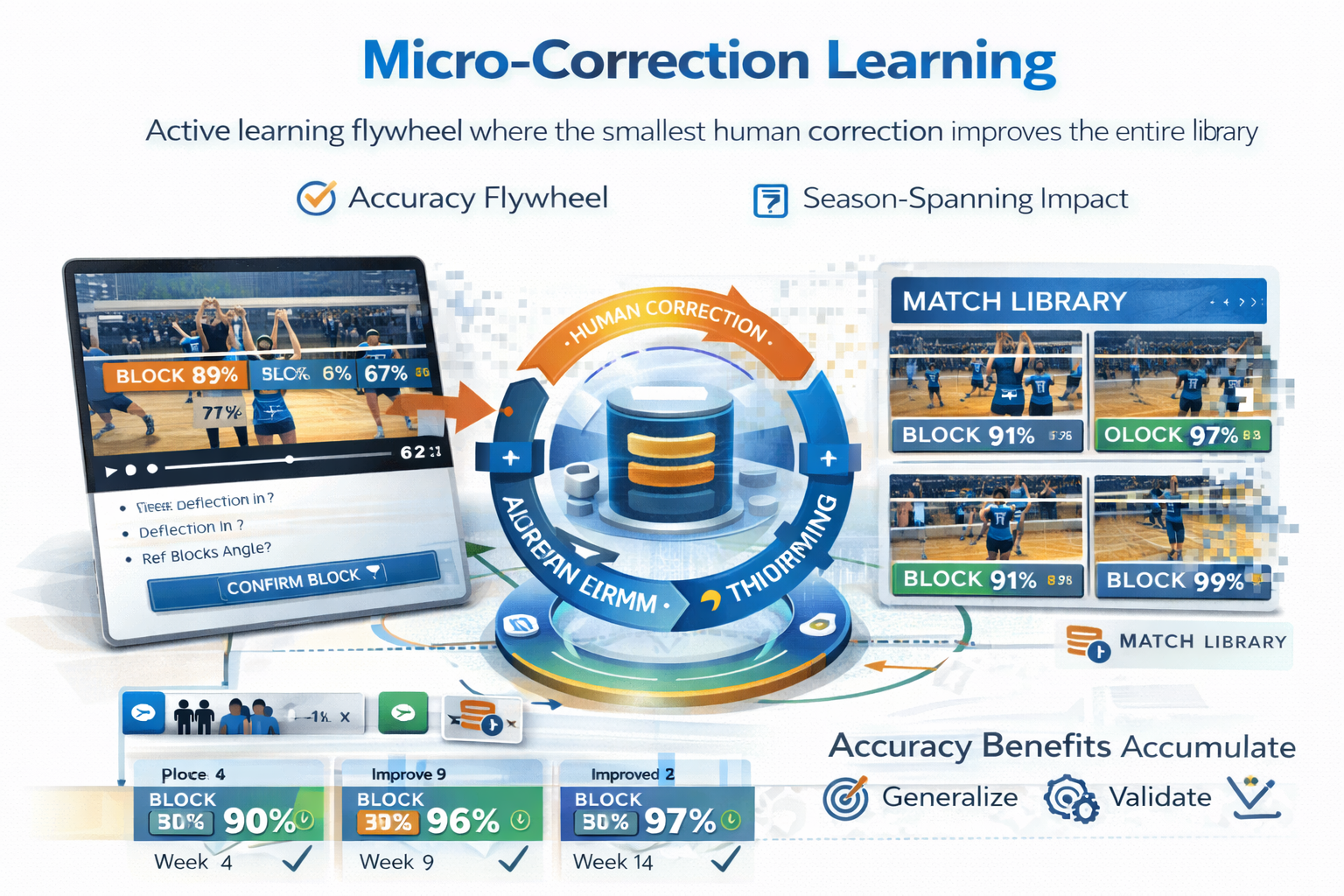
Micro-Correction Learning
Element D

Micro-Correction Learning

Active learning flywheel where the smallest human correction improves the entire season library.

The smallest possible human correction propagates labels across similar segments within that match and all future matches for that specific team or angle creating a compounding "Accuracy Flywheel" that becomes increasingly reliable without additional manual labour.

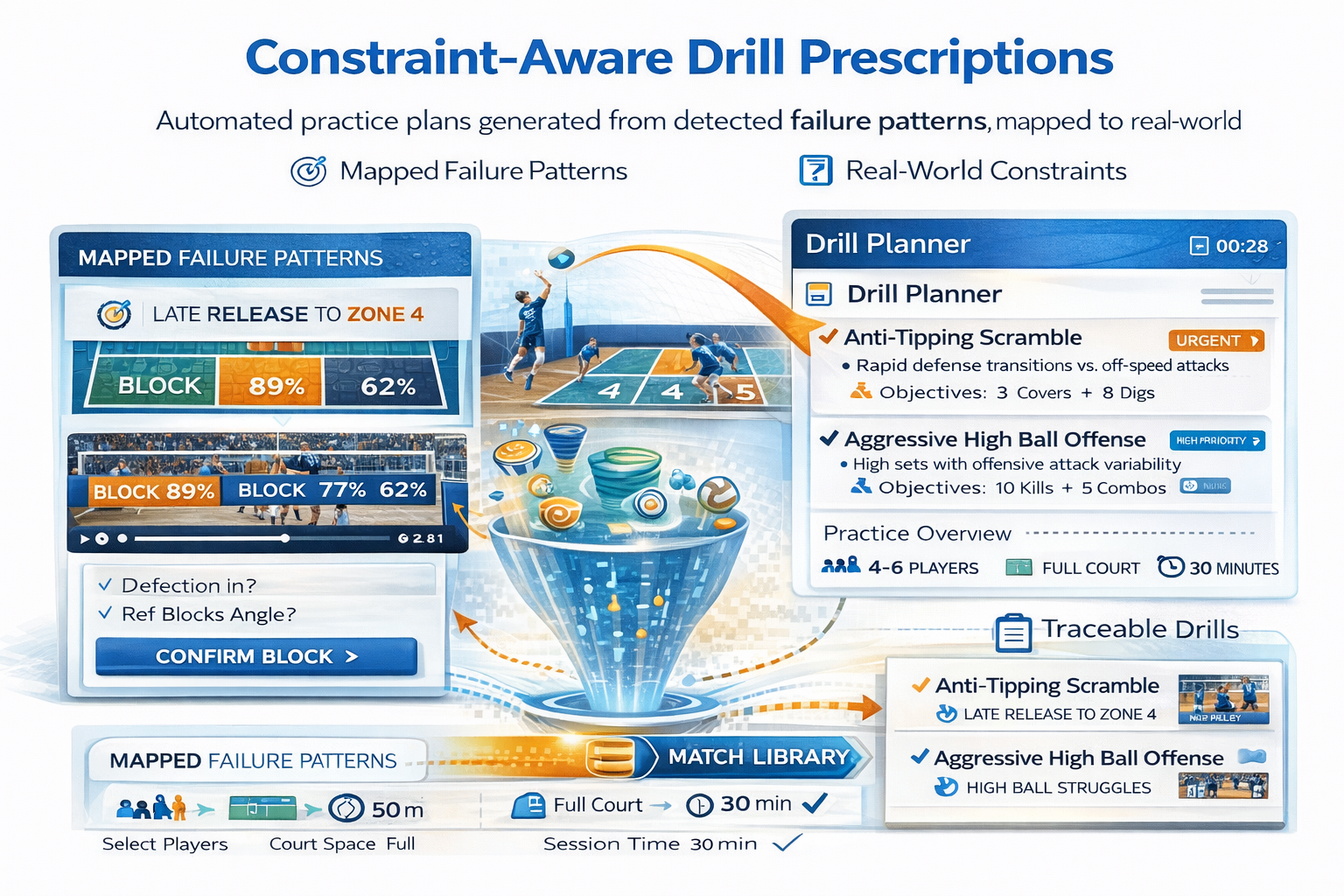
Constraint-Aware Drill Prescriptions
Element F

Constraint-Aware Drill Prescriptions

Automated practice plans generated from detected failure patterns, mapped to real-world constraints.

Generates drills parameterised by detected failure patterns (e.g., "late release to Zone 4") and real-world constraints including players available, court space, and time. Each drill is fully traceable back to the specific triggering match clips for coach verification.

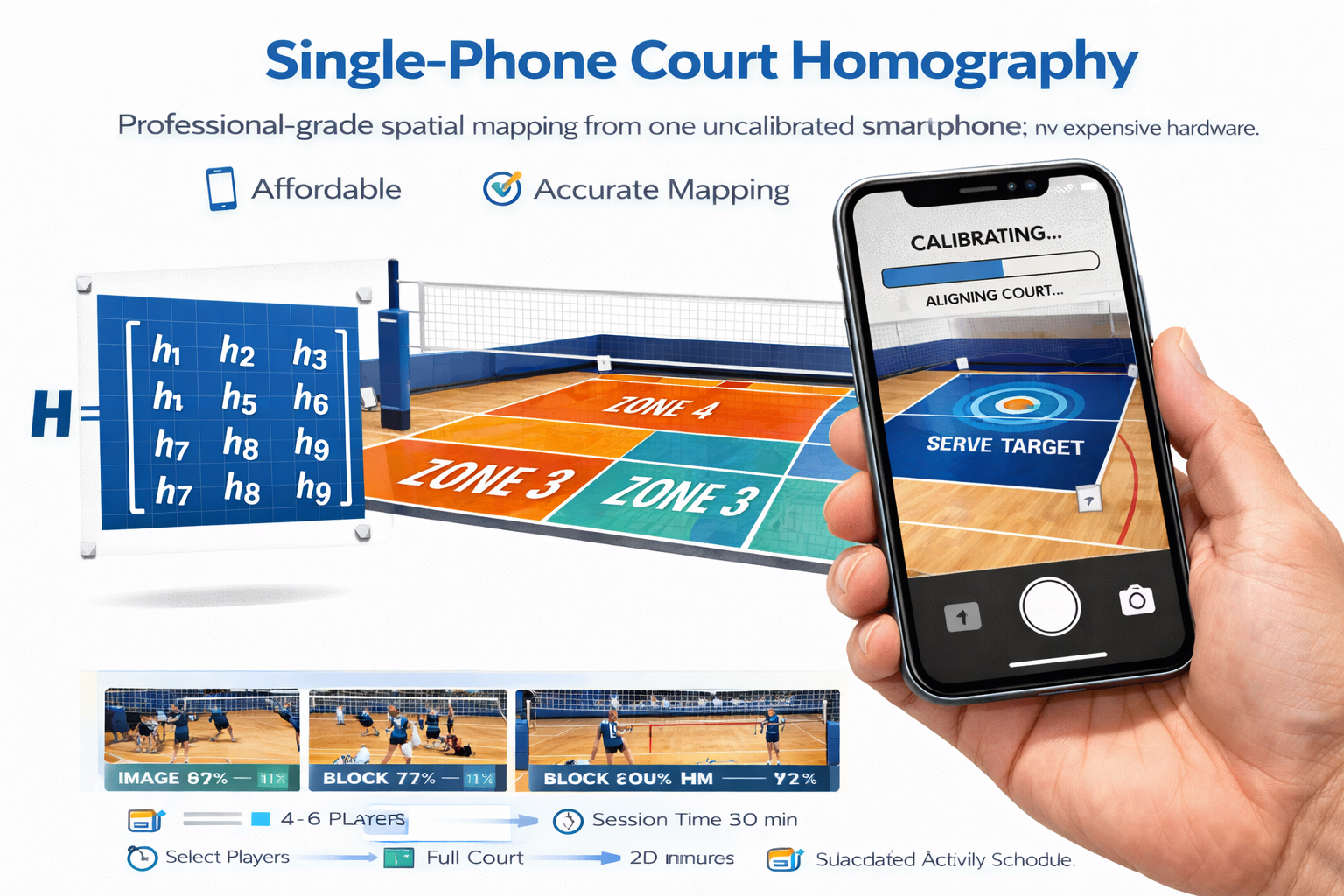
Single-Phone Court Homography
Element G

Single-Phone Court Homography

Professional-grade spatial mapping from one uncalibrated smartphone no expensive hardware.

Proprietary AR overlay and net reference onboarding estimates the homography matrix ($H$), transforming 2D image coordinates into real-world court coordinates (X, Y). Achieves professional-grade zone mapping attack zones, serve targets within 15–20mm accuracy from any standard community gym setup.

£4.45B
UK sports technology market projected by 2030 at 20.7% CAGR
403+
UK affiliated volleyball clubs — our primary serviceable market
91%
Gross margin of Scout's high-efficiency AI-driven SaaS model
£3.09M
Projected Annual Revenue by Year 5 with net profit of £1.88M

Elite Analysis.
Grassroots Budget.

A Scout Performance subscription costs less than one hour of traditional manual analyst labour delivering automated elite-level tactical intelligence 24/7.

Grassroots Tier

Community Club

For local league teams and junior clubs wanting data-driven coaching for the first time.

£49
per month · up to 15 players
  • Automated rally segmentation
  • Basic Tactical Grammar reports
  • Serve efficiency tracking
  • Single-phone AR calibration
  • GDPR-compliant mobile access
  • Offline-first edge processing
Get Started →
Institutional Tier

League / Association

For entire regional associations or university athletic unions requiring standardised taxonomy.

Custom
avg £450/month · multi-team
  • Everything in Performance, plus:
  • Cross-team benchmarking
  • Recruitment Digital Resume packs
  • Centralised talent dashboards
  • SDK & API licensing
  • Dedicated Volleyball England alignment
Enquire Now →

Common Questions

What is the "Intelligence Gap" that Scout solves in grassroots volleyball?

+
The Intelligence Gap refers to the structural divide separating elite organisations from grassroots and amateur sectors. Despite volleyball having 900 million participants, access to high-fidelity performance data remains limited and expensive. In elite environments, dedicated analysts spend 4–6 hours manually coding a single match using software like DataVolley (€799/year). For volunteer grassroots coaches managing multiple teams, this is completely unviable. Scout closes this gap by replacing manual coding with a smartphone-first AI engine that processes the same tactical data automatically reducing analysis time by over 80% at a fraction of the cost.

How does Uncertainty-Native Scouting prevent AI "hallucinations" in amateur footage?

+
Traditional sports AI tools are "uncertainty-blind" they output definitive stats even when video quality is poor, producing hallucinated data points that destroy coach trust. Scout's probabilistic architecture instead emits calibrated confidence scores for every inference. When the system encounters an ambiguous video segment (e.g., a rally obscured by shaky camera movement), it ranks the clip by expected tactical impact and prompts the coach with a targeted "what to verify" request. A 30-second human check then confirms or corrects the AI's interpretation, which automatically propagates across the entire match library via the Micro-Correction Learning flywheel.

Does Scout require specialised camera hardware or fixed multi-camera rigs?

+
No. Scout is specifically designed as a hardware-agnostic, single-smartphone platform. The 30-second AR calibration onboarding uses the user's existing smartphone camera to estimate the court homography matrix ($H$), achieving professional-grade spatial mapping within 15–20mm accuracy without any fixed rigs, specialised hardware, or multi-camera arrays. This eliminates the £1,000+ upfront hardware and analyst barriers that price grassroots clubs out of tools like Hudl Focus. The only recommended accessories are a standard tripod (from £25) and an optional wide-angle lens kit (£30) for full court visibility.

How does Scout comply with GDPR and youth athlete data protection requirements?

+
Scout was architecturally engineered within the UK's legal and safeguarding ecosystem. The platform utilises "Edge AI" to perform initial action recognition locally on-device, minimising the movement of sensitive video data to the cloud. All cloud processing occurs in UK-based encrypted data centres. Cross-club benchmarking uses differential privacy and data aggregation, ensuring individual youth athlete identities are never visible to other clubs. The platform integrates explicit parental consent workflows and adheres to the Volleyball England Safeguarding and Protecting Children Policy (Feb 2026). Scout is registered as a Data Controller with the UK Information Commissioner's Office.

Will the platform affect our existing coaching workflow or require specialised training?

+
Scout is specifically designed to require zero specialised training for coaches. The "Tactical Grammar" compiler automatically translates raw AI event tags into coach-legible concepts like "setter dump threat" eliminating the months of training required for tools like DataVolley. The platform integrates with existing coaching workflows via a mobile-first interface, offline-first architecture for gyms with poor connectivity, and AR video overlays that ground insights in familiar visual match footage. The closed-loop system automatically generates ready-to-use practice drills linked to specific match failures, so coaches receive actionable outputs immediately without needing to interpret complex analytics dashboards.

What is Scout's current development status and what validation has been completed?

+
Scout is at TRL 7 System Prototype Demonstration in Operational Environment. The functional prototype integrates all core architectural elements: the AI Tactical Recognition Engine, 3D Court Homography and AR Calibration, Formal Tactical Grammar Compiler, Uncertainty-Native Interaction Module, and Offline-First Edge Inference. Operational testing across university leagues and local club matches confirmed over 80% reduction in post-match analysis labour compared to manual coding, spatial mapping accuracy within professional-grade tolerances using a single smartphone, and reliable performance across diverse amateur gym lighting conditions. The system is currently nearing TRL 8 with pilot partnerships established with London-based clubs and university programs, and API ecosystem integration underway.
Request a Pilot or
Partnership Discussion

Whether you are a university volleyball program, grassroots club, regional association, Volleyball England partner, or technology investor — we would like to hear from you. Contact us to arrange a demonstration, discuss pilot opportunities, or explore licensing and partnership options.

Email santhoshabi0025@gmail.com
Phone +44 7990 257516
Location London, United Kingdom
Target Sectors University (BUCS) · Grassroots Clubs · NGBs · Semi-Pro · Academies